Floral Horseshoe: A Designer’s Real-World Review
First Impressions: Whimsy with Structure
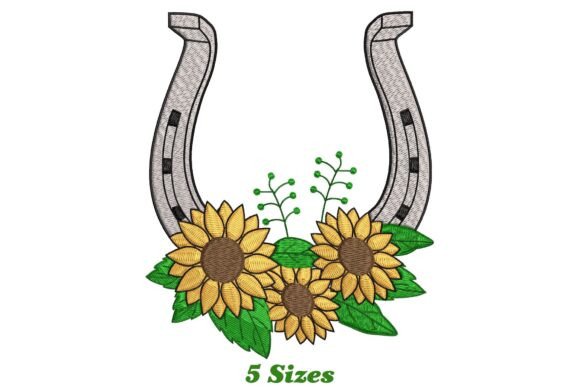
When I opened the Floral Horseshoe embroidery file, I didn’t see just another horse motif—I saw a balanced conversation between nature and tradition. The horseshoe shape is clean and legible at a glance, but it’s softened by delicate floral vines curling along the curve—no stiff symmetry, no overworked density. It feels handmade, not algorithmic. That matters when you’re stitching for clients or listing on Etsy: people respond to intentionality, not ornamentation for its own sake. As a designer who’s stitched hundreds of animal-themed pieces, I appreciate how this avoids cliché—it’s playful without tipping into cartoonish, elegant without feeling stiff.
Real Project Test: A Linen Kitchen Towel for a Local Boutique
Last week, I used Floral Horseshoe on a heavyweight linen tea towel for a small shop launch. We chose a muted sage thread on natural flax—no high-contrast tricks, just quiet confidence. The design held up beautifully: the satin stitch along the horseshoe rim gave subtle sheen, while the fill stitches in the flowers stayed crisp and breathable (no puckering, even after two washes). Customers noticed it immediately—not as “a horse,” but as “that lovely little detail near the corner.” That’s the sweet spot: recognizable enough to spark delight, refined enough to feel intentional.
Where It Shines—and Where to Pause
Floral Horseshoe works exceptionally well for:
- Custom apparel: On midweight cotton sweatshirts or structured tote bags, the shape anchors nicely above a pocket or centered on the chest.
- Baby embroidery: Its rounded lines and absence of fine interior detail make it forgiving on onesies and burp cloths—even with lightweight stabilizer.
- Holiday embroidery and wedding gifts: Stitched in ivory on ivory linen, it reads as heirloom-quality for bridal aprons or baby shower towels.
- Embroidered patch production: Clean outer edges and moderate stitch density mean clean cutaway backing and easy iron-on application.
But proceed thoughtfully with:
- Thin or stretchy fabric: Like jersey tees or rayon blends—test first. The floral elements rely on stable tension; too much give blurs the vine definition.
- Curved surfaces: Caps or beanies require careful hooping and possibly slight digitizing tweaks—the horseshoe’s gentle arc can distort if forced onto tight curves.
- Dark fabric: Avoid light pastel threads unless you’re using underlay or topping. The floral details vanish without contrast.
- Small hoop sizes: Below 4×4 inches, some petal subtlety gets lost. It’s still charming—but treat it as an accent, not a focal point.
Design Integrity Meets Commercial Sense
As someone who sells digital embroidery files and also runs a craft business, I judge designs by two things: how they look *finished*, and how they scale across use cases. Floral Horseshoe delivers both. It reads clearly on a printable mockup—no pixelated edges, no ambiguous junctions—so your Etsy listing looks trustworthy before a single stitch is made. And because it’s rooted in the Horses category yet elevated by botanical language, it sidesteps seasonal fatigue. You won’t need to retire it after summer equestrian fairs.
For small shop owners: this isn’t just a design—it’s a brand connector. Pair it with neutral packaging and simple typography, and it becomes part of a cohesive story about grounded joy. For Etsy sellers: it converts well because it’s specific enough to attract search (“horse embroidery towel”) but flexible enough to support variations (“floral horse gift,” “equestrian kitchen decor”).
Practical Designer Notes Before You Stitch
Before committing to your first run—especially for client work or inventory—do these six things:
- Run a test on scrap fabric that matches your final project’s weight and texture. Watch how the floral fill interacts with your chosen stabilizer.
- Check thread color contrast on both light and dark backgrounds. What reads softly on cream may disappear entirely on navy.
- Review stitch density visually—not just numerically. Dense areas should breathe; sparse areas shouldn’t look unfinished.
- Confirm your hoop size accommodates the full shape comfortably. Don’t force it into a margin.
- Inspect corners and inner curves in your embroidery software. Are there tiny running stitches where satin might lift? Adjust if needed.
- Verify licensing terms. If you plan to sell finished products or resell the machine embroidery design as part of a kit, confirm commercial use is permitted.
Final Thought: It’s Not Just a Motif—It’s a Moment
I’ve used Floral Horseshoe on everything from a personalized baby blanket for a friend to a limited-run apron series for a local bakery. Each time, it landed with warmth—not flash, not fuss, just sincerity. That’s rare in digital embroidery assets. It doesn’t shout. It invites. And in a market crowded with loud, over-digitized trends, that quiet clarity is exactly what makes a handmade product feel like a gift, not just merchandise. Whether you’re an embroidery designer refining your portfolio, an Etsy seller building repeat customers, or a craft business owner choosing tomorrow’s bestseller—Floral Horseshoe earns its place not because it’s trendy, but because it’s thoughtful, adaptable, and genuinely kind to fabric, machine, and maker alike.