Funny Frog: A Whimsical Design That Actually Works
First Impressions: Charming, Not Cutesy
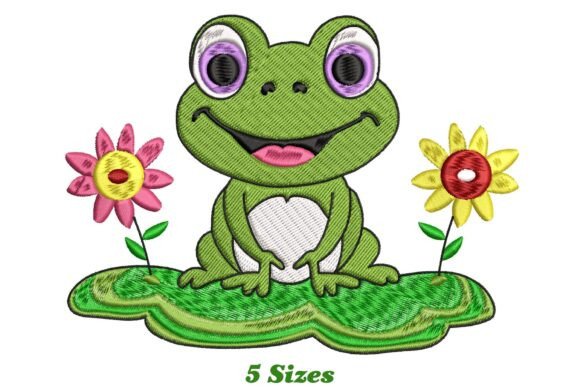
When I opened the Funny Frog embroidery file, I wasn’t met with over-the-top cartoon exaggeration—no googly eyes or forced grins. Instead, it’s a balanced, expressive little character: rounded body, soft curves, subtle smile, and just enough detail in the limbs and face to read clearly at 3–4 inches tall. It lands squarely in the Baby Animals category, but avoids infantilizing—this isn’t just for onesies. It’s got personality without pretense, and that makes it versatile. As a designer who regularly selects machine embroidery designs for client work and my own craft business, I immediately saw its potential on a linen tea towel, a relaxed-fit sweatshirt, or even as an embroidered patch on a denim tote.
A Real-World Test: The Nursery Tote Bag Project
Last week, I used Funny Frog on a custom organic cotton tote for a local baby boutique. The bag was unbleached, medium-weight, and slightly textured—ideal for showing off stitch definition without overwhelming the fabric. I hooped it with a light cutaway stabilizer (no tear-away fluff on the back), chose soft pastel thread colors (mint green body, pale yellow belly, charcoal eyes), and stitched at mid-range density. The result? Clean satin-stitched outlines, smooth fill-stitch body sections, and no puckering—even around the curved legs. Customers loved how friendly it looked in person—not “cute” in a fleeting way, but warm and intentional. That matters when you’re pricing handmade products for retail or Etsy.
Where It Shines—and Where to Pause
Funny Frog performs best on stable, medium-to-heavy fabrics: cotton twill aprons, brushed cotton pillow covers, terry cloth towels, and fleece-lined baby blankets. On those surfaces, its proportions hold up, stitch clarity stays high, and the whimsy reads as thoughtful, not sloppy.
- Custom apparel: Works beautifully on crewneck sweatshirts and structured caps—but avoid curved bill areas unless you’ve tested hoop placement and stabilizer support first.
- Baby embroidery: Ideal for onesies and burp cloths, but double-check stitch density if using lightweight interlock cotton; reduce fill density slightly to prevent stiffness.
- Holiday or gift embroidery: Pairs well with simple monograms or seasonal accents (e.g., a tiny embroidered lily pad beside it for spring gifts). Avoid pairing it with overly busy backgrounds—it’s strong enough to stand alone.
- Commercial embroidery: Its clean shape scales well from 2.5" to 5", making it adaptable across product lines without redrawing.
Watch These Details Before You Stitch
This isn’t a “drop-and-stitch” design—and that’s a good thing. Its charm lives in subtlety, so attention to execution pays off:
- Test on scrap fabric first—especially if using dark fabric. The frog’s belly and eye contrast rely on thread color choice, not automatic digitization tricks.
- Review stitch density. Dense fill areas (like the body) can stiffen thin fabrics. For baby clothes or lightweight tees, consider lightening the fill or switching to a lighter stabilizer.
- Confirm hoop size compatibility. While Funny Frog fits standard 4x4 hoops comfortably, check your file’s actual dimensions before batching orders.
- Inspect small details: the eyes and mouth are defined with running stitch and satin stitch—not tiny fill clusters—so they’ll hold up through washing and wear.
- Try black-and-white mockups before finalizing thread palettes. This design gains strength from tonal contrast, not just color.
How It Shapes Your Finished Product
As an embroidery designer, I judge a machine embroidery design not just by how it stitches—but how it elevates the finished product. Funny Frog adds instant warmth and approachability. On a boutique kitchen towel, it doesn’t shout—it invites. On a personalized gift, it feels hand-selected, not mass-produced. That builds customer trust. For Etsy sellers and small shop owners, that perception translates directly to perceived value and repeat buyers.
It also supports brand consistency. Whether you’re building a nature-themed nursery line or a playful apparel collection, Funny Frog fits without demanding redesign. And because it’s not overly detailed or fragile-looking, it photographs well in printable mockups—no retouching needed for social listings or digital embroidery file previews.
Practical Designer Notes for Real Work
Before adding Funny Frog to your next craft fair batch or wholesale order:
- Use proper stabilizer—cutaway for stretchy knits, tear-away for stable wovens. Skip the “no-stabilizer” experiment unless you’ve tested it thoroughly.
- Match thread colors thoughtfully. A muted olive body with cream belly reads more sophisticated than neon green + hot pink—unless that’s your brand voice.
- Check licensing terms carefully. If you plan to sell finished items (embroidered patches, tote bags, baby onesies), confirm whether the embroidery file permits commercial use.
- Don’t assume it works on every surface. Curved caps, ribbed knit cuffs, and ultra-thin voile require extra stabilization and possibly adjusted tension—test first.
- Remember: this is a machine embroidery design, not an applique design. No fabric layers needed—just smart digitization and careful execution.
Final Thought: Personality With Purpose
Funny Frog isn’t just another animal motif. It’s a quiet example of how restraint and proportion make a machine embroidery design feel intentional—not decorative filler. It brings levity without sacrificing craftsmanship, and playfulness without compromising professionalism. Whether you’re stitching for a client, prepping holiday inventory, or building digital embroidery file collections for your creative business, it earns its place in your library. Just treat it like the thoughtful design it is: test it, tune it, and let its quiet charm do the talking.